
I wrote and edited a range of articles for The Courier, a European Commission-funded magazine raising awareness about African, Caribbean, Pacific and European Union (ACP-EU) cooperation. With a circulation of 80,000, the magazne was distributed in four languages in over 100 countries. The following article is a personal favourite of mine. View the original article

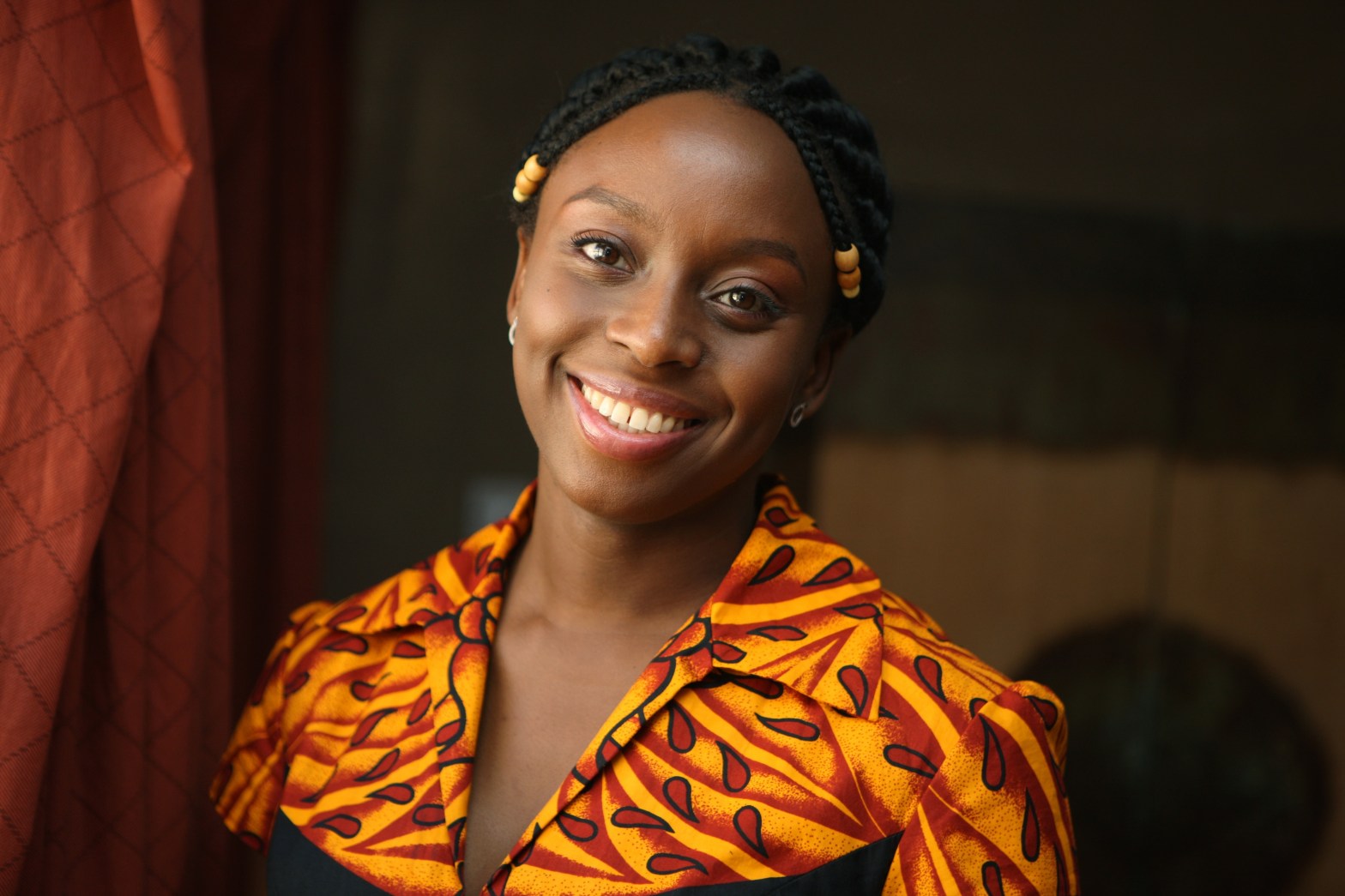
Photo source: McArthur Foundation
“Stories matter … stories have been used to dispossess and to malign, but stories can also be used to empower and to humanize.” (Chimamanda Ngozi Adichie)
Chimamanda Ngozi Adichie, acclaimed Nigerian novelist, the young, gifted storyteller wowing readers worldwide, knows all too well about the power of the story. “Endowed with the gifts of ancient storytellers” is how Nigerian literary giant Chinua Achebe describes her – he happens to be Adichie’s hero.
Empowering and humanizing qualities propel the complex characters, events and situations brought to life in Adichie’s books; qualities that resonate so well with readers from all walks of life. From Purple Hibiscus (2003) and Half of a Yellow Sun (2006) to her collection of short stories entitled The Thing Around Your Neck (2009), some are introduced to new cultural perspectives and experiences, while others – like myself – use her books to reinforce and navigate such perspectives and experiences.
Adichie’s stories mostly revolve around Igbo-Nigerian characters, made all the more vivid through their occasional use of Igbo phrases which are sometimes unapologetically untranslated. But she does not merely tell Nigerian stories – she tells human ones.
The breakthrough
Adichie grew up in a university campus in Nsukka, Nigeria where her father was a professor and her mother an administrator. This, in addition to her middle-class upbringing meant that she was always surrounded by books – but most of these books had very little to do with her own reality.
“What I read were British and American children’s books”, she said when delivering her now famous 2009 talk on ‘The danger of the single story’. “When I began to write, I wrote exactly the kinds of stories I was reading … about things with which I could not personally identify.”
Things changed when Adichie discovered African books. Because of writers like Achebe and Guinean poet Camara Laye, her perception of literature changed, and she started to write about things she recognized – she realized that people like her could exist in literature:
“[The discovery of African writers] saved me from having a single story of what books are.”
Indeed, Adichie’s books tell multiple, multilayered stories and have garnered her numerous awards and accolades, including the coveted Orange Broadband Prize for Fiction in 2007 for Half of a Yellow Sun. What’s more, her short stories have been published in celebrated literary journals and her novels have been integrated into school curriculums worldwide.
The storyteller
Adichie’s stories provide in-depth and multi-faceted explorations of individual characters, many times set within larger social or political contexts in post-colonial Nigeria.
Take Half of a Yellow Sun for example, the book arguably closest to Adichie’s heart. The story revolves around the Nigerian Civil War (1967-1970), fought between the Nigerian government and the Republic of Biafra, the secessionist Southeastern region of Nigeria mainly inhabited by the Igbo people. The 33-year-old Adichie, herself Igbo, was born “in the shadow of Biafra” seven years after the end of the war, a horrific chapter in Nigeria’s history. To this day, the war is a topic that is extremely difficult to discuss in Nigeria, but Adichie unflinchingly gives a human face to the devastating events, while poignantly depicting the horrors of war. The ease with which Adichie shifts perspectives, narratives and periods in time makes this story all the more immersive.
The story centres on Olanna and Kainene, twin sisters from a privileged Igbo family who contrast in personality, physical appearance and their choice of lovers. Olanna falls in love with Odenigbo, a fiery and revolutionary academic, while Kainene falls for Richard, a shy, awkward and well-meaning Englishman with a passion for Igbo-Ukwu art and a devotion to the Biafran cause. Then there’s Odenigbo’s houseboy Ugwu – easily one of the most memorable characters in the book – who comes of age as the story progresses. Events leading up to and during the war test the characters and their relationships, forcing them to make heartwrenching choices. The story is as much an exploration of love, social classes, community, traditional versus modern ways of life – and individuals – as it is of events and issues related to the war.
It also produces gems of historical and social commentary, such as this phrase from Odenigbo:
“The real tragedy of our postcolonial world is not that the majority of people had no say in whether or not they wanted this new world; rather, it is that the majority have not been given the tools to negotiate this new world.”
Inspired by real life individuals, the novel pays homage to the millions who lost their lives during the war, including Adichie’s grandfathers. She has noted that the book is a tribute to them, as well as a means of engaging with her history and starting a conversation about the war. Despite the extensive bibliography at the end of the book, her greatest source was her father, who during the war lost everything he and his wife owned.
The inspiration
Adichie is an inspiration – not only to the Nigerians who stop her on the street to passionately discuss her plots or express their gratitude for her work; not only to the female political figures she supports or the budding female writers she coaches in her workshops; not only to the university student looking for a publisher, well aware of Adichie’s decision to give up studying medicine in Nigeria and pursue her writing dreams and academics in the US; no, not only to them, but also to me.
Being Igbo, Nigerian, and one of her devoted fans, she is helping me navigate my culture and history in new ways. Her books increasingly take me on different journeys through which I engage with the ‘multiple stories’ of my country and culture. I can’t wait for the next journey.
 Okechukwu Umelo