
Stories matter: a glimpse into the world of Chimamanda Ngozie Adichie

I wrote and edited a range of articles for The Courier, a European Commission-funded magazine raising awareness about African, Caribbean, Pacific and European Union (ACP-EU) cooperation. With a circulation of 80,000, the magazne was distributed in four languages in over 100 countries. The following article is a personal favourite of mine. View the original article

Chimananda Adichie
Photo source: McArthur Foundation

“Stories matter … stories have been used to dispossess and to malign, but stories can also be used to empower and to humanize.” (Chimamanda Ngozi Adichie)

Chimamanda Ngozi Adichie, acclaimed Nigerian novelist, the young, gifted storyteller wowing readers worldwide, knows all too well about the power of the story. “Endowed with the gifts of ancient storytellers” is how Nigerian literary giant Chinua Achebe describes her – he happens to be Adichie’s hero.

Empowering and humanizing qualities propel the complex characters, events and situations brought to life in Adichie’s books; qualities that resonate so well with readers from all walks of life. From Purple Hibiscus (2003) and Half of a Yellow Sun (2006) to her collection of short stories entitled The Thing Around Your Neck (2009), some are introduced to new cultural perspectives and experiences, while others – like myself – use her books to reinforce and navigate such perspectives and experiences.

Adichie’s stories mostly revolve around Igbo-Nigerian characters, made all the more vivid through their occasional use of Igbo phrases which are sometimes unapologetically untranslated. But she does not merely tell Nigerian stories – she tells human ones.

The breakthrough

Adichie grew up in a university campus in Nsukka, Nigeria where her father was a professor and her mother an administrator. This, in addition to her middle-class upbringing meant that she was always surrounded by books – but most of these books had very little to do with her own reality.

“What I read were British and American children’s books”, she said when delivering her now famous 2009 talk on ‘The danger of the single story’. “When I began to write, I wrote exactly the kinds of stories I was reading … about things with which I could not personally identify.”

Things changed when Adichie discovered African books. Because of writers like Achebe and Guinean poet Camara Laye, her perception of literature changed, and she started to write about things she recognized – she realized that people like her could exist in literature:

“[The discovery of African writers] saved me from having a single story of what books are.”

Indeed, Adichie’s books tell multiple, multilayered stories and have garnered her numerous awards and accolades, including the coveted Orange Broadband Prize for Fiction in 2007 for Half of a Yellow Sun. What’s more, her short stories have been published in celebrated literary journals and her novels have been integrated into school curriculums worldwide.

The storyteller

Adichie’s stories provide in-depth and multi-faceted explorations of individual characters, many times set within larger social or political contexts in post-colonial Nigeria.

Take Half of a Yellow Sun for example, the book arguably closest to Adichie’s heart. The story revolves around the Nigerian Civil War (1967-1970), fought between the Nigerian government and the Republic of Biafra, the secessionist Southeastern region of Nigeria mainly inhabited by the Igbo people. The 33-year-old Adichie, herself Igbo, was born “in the shadow of Biafra” seven years after the end of the war, a horrific chapter in Nigeria’s history. To this day, the war is a topic that is extremely difficult to discuss in Nigeria, but Adichie unflinchingly gives a human face to the devastating events, while poignantly depicting the horrors of war. The ease with which Adichie shifts perspectives, narratives and periods in time makes this story all the more immersive.

The story centres on Olanna and Kainene, twin sisters from a privileged Igbo family who contrast in personality, physical appearance and their choice of lovers. Olanna falls in love with Odenigbo, a fiery and revolutionary academic, while Kainene falls for Richard, a shy, awkward and well-meaning Englishman with a passion for Igbo-Ukwu art and a devotion to the Biafran cause. Then there’s Odenigbo’s houseboy Ugwu – easily one of the most memorable characters in the book – who comes of age as the story progresses. Events leading up to and during the war test the characters and their relationships, forcing them to make heartwrenching choices. The story is as much an exploration of love, social classes, community, traditional versus modern ways of life – and individuals – as it is of events and issues related to the war.

It also produces gems of historical and social commentary, such as this phrase from Odenigbo:

“The real tragedy of our postcolonial world is not that the majority of people had no say in whether or not they wanted this new world; rather, it is that the majority have not been given the tools to negotiate this new world.”

Inspired by real life individuals, the novel pays homage to the millions who lost their lives during the war, including Adichie’s grandfathers. She has noted that the book is a tribute to them, as well as a means of engaging with her history and starting a conversation about the war. Despite the extensive bibliography at the end of the book, her greatest source was her father, who during the war lost everything he and his wife owned.

The inspiration

Adichie is an inspiration – not only to the Nigerians who stop her on the street to passionately discuss her plots or express their gratitude for her work; not only to the female political figures she supports or the budding female writers she coaches in her workshops; not only to the university student looking for a publisher, well aware of Adichie’s decision to give up studying medicine in Nigeria and pursue her writing dreams and academics in the US; no, not only to them, but also to me.

Being Igbo, Nigerian, and one of her devoted fans, she is helping me navigate my culture and history in new ways. Her books increasingly take me on different journeys through which I engage with the ‘multiple stories’ of my country and culture. I can’t wait for the next journey.
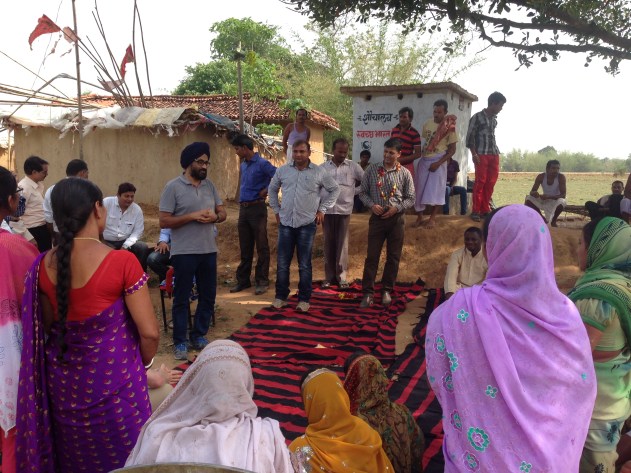
Scaling up and sustaining behaviour change

I am a go-to writer and editor, called upon for my ability to convey information in a clear and concise manner, adapted to diverse audiences. The article below is a widely read piece written for the Water Supply and Collaborative Council (WSSCC). Read the original article here

Scaling up and sustaining behaviour change-web
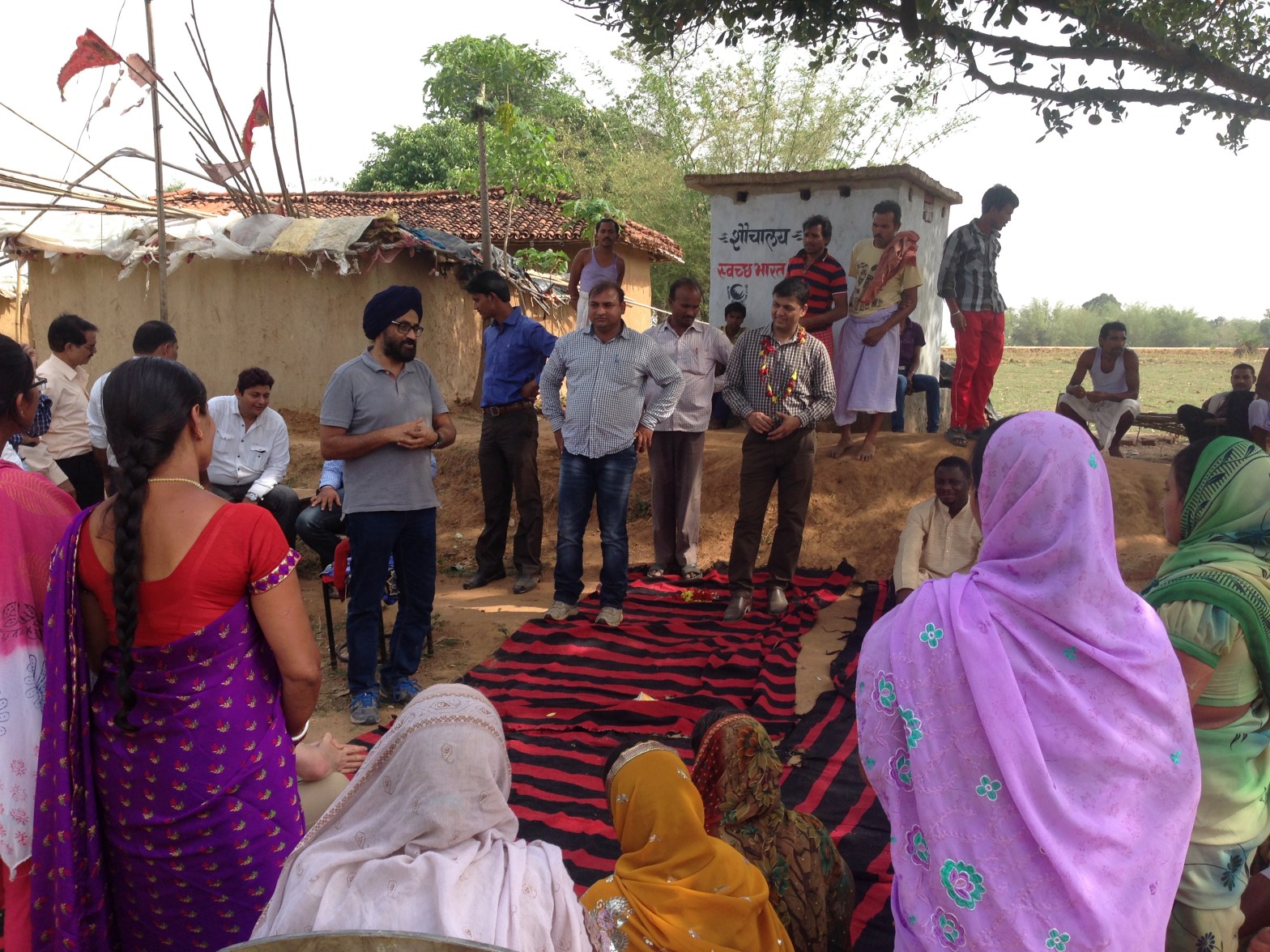
Photo courtesy of WSSCC

With the sanitation crisis still widespread, water, sanitation and hygiene (WASH) practitioners are actively looking for ways to scale up and sustain sanitation and hygiene improvements. Some key questions are: What does ‘scaling up’ sanitation and hygiene behaviour change mean for WASH practitioners? How can sanitation and hygiene behaviour change be sustained? How should ‘slippage’ from open defecation free (ODF) status be defined and mitigated?

All of these questions were explored in the first ever online discussion bringing together the WSSCC Community of Practice on Sanitation and Hygiene in Developing Countries and the Sustainable Sanitation Alliance (SuSanA).

Held in late 2015 for three weeks, the overarching theme of the joint discussion was ‘Sanitation and hygiene behaviour change programming for scale and sustainability’. This theme was divided into three inter-linked sub-themes, namely ‘Programming for scale’, ‘Sustainability for behaviour change’ and ‘ODF slippage’. The global discussion was an unprecedented opportunity for the two networks, both of which have over 5,000 members, to share learning and explore links between research and practice on sanitation and hygiene behaviour change.

Scaling up behaviour change: a “wicked problem”

In the first week of the discussion, participants worked to define scale for sanitation and hygiene behaviour change programming, share examples of successful scale-up and understand stakeholders’ responsibilities and relationships. Suvojit Chattopadhyay, a consultant focused on monitoring and evaluation, described the sanitation challenge as a “wicked problem” and highlighted the complexity of inducing lasting behaviour change:

“The very nature of careful social engineering required to bring about this behaviour change seems to run contrary to some of the factors that make an intervention scalable – an ability to standardize inputs and break programme components down to easily replicable bits.”

Another challenge highlighted was that the different elements of WASH programmes do not scale up in the same way or through the same mechanisms. As Roland Werchota from the German international development organization GIZ noted, behaviour change at scale alone does not necessarily mean that scale is also reached on access to sanitation.

Anand Shekhar, programme manager for WSSCC’s Global Sanitation Fund (GSF)-supported programme in India, provided an example of successful scale-up in his country. The process of scaling up and achieving ODF status in Nadia District in West Bengal required stakeholders to uphold and share a set of key values including decentralization, joint planning, co-financing and collective action. In addition, several participants noted that there is a need to look beyond the WASH sector for successful scale-up examples – livelihoods programmes, for example, could provide good inspiration.

Participants agreed that there is a need to continue to learn how to effect systemic sanitation and hygiene behaviour change in different contexts. They also noted that the WASH sector should work more with non-traditional partners and experts, such as anthropologists, sociologists and psychologists, to better understand behaviour, and with the private sector, to learn more about innovative communication campaigns.

Sustaining behavior change: challenges and techniques

The second week explored the social and behavioural norms and dynamics that influence hygiene practices, specifically handwashing and the use of sanitation facilities.

Participants highlighted some of key ways to ingrain handwashing and latrine use within existing socio-cultural beliefs and norms, such as: using religious scripture related to hygiene; building on traditional beliefs about hygiene; experiential learning; linking hygiene to social status, dignity and pride; and influencing the young.

Participants agreed that understanding the incentives and internal motivations for behaviour change is key to designing related techniques. As such, and as highlighted in the previous week, behaviour change techniques must be tailored to the context. It was also stressed that creating an enabling environment for behaviour change is key, with techniques such as training health promoters to conduct awareness sessions, training latrine construction workers and plumbers, and building demonstration latrines in pilot areas.

Findings from a systematic review conducted by the International Initiative for Impact Evaluation (3ie) were also shared to highlight challenge of sustaining behaviour change:

“Barriers to behaviour change depend on the stage of the project. Many studies assess the health benefits of initial uptake of safe water, hygiene and sanitation technologies and practices. But few studies consider sustained use. The early project period may be characterized by enthusiasm over the new technology or promotional activities. Although external support ends during the early post-project period, the promotional messages may still be fresh in people’s minds. However, influential household members who were skeptical may reassert their domination during this phase. And finally, in the late post-project period stockouts, technology failure or poor maintenance systems can pose a serious threat to sustained adoption.”

The review also found that:

“… frequent, personal contact with a health promoter over a period of time is associated with long-term behaviour change. The review suggests that personal follow-up in conjunction with other measures like mass media advertisements or group meetings may further increase sustained adoption.”

In terms of behaviour change techniques, participants suggested that hygiene promotion should be integrated as much as possible within the existing health system rather than setting up parallel systems. Others suggested that volunteers, as opposed to paid professionals, should be used for health promotion, as studies have shown this to be more effective for behaviour change.

Other highlighted techniques included the RANAS model for systematically mapping potential behavioural determinants (based on human psychology) and then linking them practically to specific behaviour change technologies and integrating multi-faceted, holistic and context-specific monitoring and evaluation systems into behaviour change programmes.

How should we manage ‘slippage’?

In the third and final week, the conversation moved on to address what happens when there is a return to previous unhygienic behaviours or an inability of some or all community members to continue to meet all ODF criteria.

As colleagues from the GSF pointed out:

“…there is a lack of clarity (or at least acceptable/universal definitions) of what slippage actually is and there is no panacea for how to come to terms with slippage, which is dynamic and context specific. What we do know is that slippage is an expected aspect of sanitation interventions, especially those at scale, and NOT a sign of a failure thereof.”

Addressing patterns of slippage, GSF colleagues noted that “sanitation and hygiene behaviour change is a non-linear process” and “the more often interventions are repeated and follow-up support is provided, the less dramatic the slippage will be until eventually a level of maturity is met and behaviours ‘stick’.”

Key ODF slippage factors shared by colleagues included:

  • Socio-cultural aspects such as communal conflict
  • Environmental aspects such as flooding
  • Financial/economic aspects such as unaffordable hardware
  • Political aspects such as unhealthy competition between local governments
  • Programme limitations, such as weak CLTS triggering facilitation

Participants also agreed that the roles and responsibilities of key stakeholders in managing ODF status must be further clarified. Highlighting the role of WASH practioners, Joséa Ratsirarson from the GSF-supported programme in Madagascar said:

“Once identified, facilitators should help the community to find its own solution rather than bringing external solutions to them. We, as external to the community, cannot just solve nor have all the solutions. The problem comes from within the community and therefore the solution should be community-led, our role is to facilitate the process of finding these internal solutions.”

Strategies for preventing and mitigating slippage included:

  • Establishing WASH Clinics, which bring together a group of villages to review progress across all communities
  • Establishing Local Task Groups on Sanitation consisting of local government staff, religious leaders and traditional leaders. In Nigeria, their role is to conduct monthly verification of ODF communities, and they have also been used to advocate to ‘stubborn’ or lagging communities
  • Establishing WASH Committees within the communities themselves to support ODF achievement and sustainability
  • Incorporating CLTS triggering in larger initiatives that go beyond sanitation and hygiene
  • Supporting demand creation activities
  • Understanding why slippage has happened in order to inform effective and context-specific solutions
  • Establishing robust monitoring and evaluation systems

At the end of the discussion, participants agreed that there is a need to continue ‘learning by doing’, to improve knowledge and capacity in scaling up and sustaining sanitation and hygiene behaviour change.

Read more about the discussion by downloading the complete summary report.

10 reasons to partner with the Global Sanitation Fund

I have extensive experience writing content for and managing the production of partnership and resource mobilization products, such as the flagship Global Sanitation Fund product, ’10 reasons to partner with the Global Sanitation Fund’.  View the content below or access the original version here

Joining-hands-10-reasons-web

The Global Sanitation Fund (GSF) invests in behaviour change activities that enable large numbers of people in developing countries to improve their sanitation and adopt good hygiene practices. Established in 2008 by the UNOPS-hosted Water Supply and Sanitation Collaborative Council (WSSCC), the GSF is the only global fund solely dedicated to sanitation and hygiene. The GSF is community-based, government-supported and commercially operated. Households and local governments work with local entrepreneurs and a network of hundreds of partners. Together, they create the conditions for tens of millions of people to live in open defecation free environments and access adequate toilets and handwashing facilities. Discover the 10 reasons to partner with the GSF below or download the publication.

1- Together with partners, we address one of the most important issues of our time – the sanitation and hygiene crisis
Poor sanitation and hygiene claims millions of lives, exacerbates malnutrition and hinders economic growth and development. Yet, much of these human and economic losses are preventable. Deaths from diarrhoeal diseases, often linked to poor sanitation and hygiene, outnumber those from malaria and tuberculosis, which are better-known and funded. According to the World Bank, poor sanitation costs countries approximately $260 billion annually. Effective tools and participatory methods are readily available. Yet, improving sanitation and hygiene remains a challenge for 2.4 billion people, about a third of the world’s population.

2 – We focus on efficiency and cost-effectiveness to achieve large-scale results
Achieving adequate and equitable sanitation for all by 2030 requires acceleration and expansion of efforts at the country level. With a focus on collective behaviour change within communities, the GSF supports national and local governments, and a range of other stakeholders, to effectively achieve universal and sustainable sanitation coverage.

3 – The programmes we fund are designed, implemented and adapted locally
The GSF supports collaborative processes driving national sanitation and hygiene improvement programmes. While building on global experiences and proven approaches, GSF-supported programmes are designed by in-country stakeholders. Governments and external donors are encouraged to contribute to and build upon the GSF model. Furthermore, GSF-supported country programmes learn from each other and share experiences for continuous improvement.

4 – Together with partners, we strengthen sector coordination
The GSF requires collaboration between water, sanitation and hygiene actors in a country – including government bodies, NGOs and international agencies – as a prerequisite for funding. This collaboration results in a nationally-coordinated plan that can be readily scaled up because key stakeholders are invested in the work. It also strengthens existing national planning platforms, ensuring sanitation and hygiene are policy priorities.

5 – Our partners build a sanitation movement to achieve impact
Sanitation is everybody’s business. Open defecation creates health risks for everyone in the community. GSF-funded programmes reach out to all sanitation and hygiene stakeholders to encourage them to participate and play their part. Nurturing champions at every level accelerates the movement to improve sanitation and hygiene.

6 – We aim to achieve collective behaviour change inclusively, sustainably and on a large scale
The GSF focuses its resources on supporting collective behaviour change approaches, most notably through community-led total sanitation. Our carefully designed activities ignite change within communities through awareness raising and engagement, ensuring the inclusion of all people, particularly women and girls, children and youth, the elderly, the disabled, and disadvantaged groups. Sustainable behaviour change is carefully monitored and independently verified. Through smart design and engagement with governments at all levels, GSF-supported programmes work in thousands of villages and achieve results in relatively short timeframes.

7 – Our approach can transform people’s lives and achieve benefits beyond sanitation
The GSF‘s people-centred approach engages households in thousands of villages, enabling people to make informed decisions about their sanitation and hygiene behaviour that can positively impact their health, education, productivity and dignity. Communities drive their own development by making substantial investments in their sanitation solutions. In addition, the local advocates and natural leaders that emerge often use the skills acquired and experience to address other issues, such as education. These mobilized communities can also attract additional funding for sanitation and hygiene or serve as a springboard for delivering effective programmes in other areas.

8 – The results of our work provide opportunities for financial mobilization
When country governments experience first-hand the value for money of collective behaviour change through GSF-funded programmes, they have an added incentive to invest financial resources into these activities. In addition, building upon the coordination mechanisms, decentralized delivery and solid monitoring systems in place, donors can use existing GSF funding structures to provide more efficient financing for collective sanitation and hygiene programmes, at a lower transaction cost.

9 – We build upon WSSCC’s strengths
As a central part of WSSCC, the GSF is able to achieve further impact on sanitation and hygiene by drawing upon WSSCC National Coordinators, utilizing its large network of partners, and benefiting from the Council’s dedicated focus on equity, results and sustainability. Furthermore, we channel WSSCC’s strengths in policy advocacy, networking and coordination. National ownership of development work is critically important, as is an on-the-ground network to support these initiatives. WSSCC knows and respects this.

10 – Our model is conducive to global investment needs for sanitation and hygiene
The United Nations system has identified global funds as an important tool to enable member states to achieve their national development targets and the Sustainable Development Goals, including those focused on sanitation and hygiene. As a multi-donor trust fund, the GSF over the next 15 years will further accelerate access to sanitation for tens of millions of people. It will also put in place effective systems for coordination, implementation and monitoring, mobilizing public investment and private capital to enable member states to achieve their goals.

How to partner with us

Invest funds
The GSF is open to contributions from a variety of sources, including governments, foundations and the private sector.

Collaborate with us
Learn more about collaborating with the GSF and WSSCC here.

Contact us
Reach out to us via wsscc@wsscc.org to learn more about partnership opportunities.

WSSCC gratefully acknowledges the donors that, through its lifetime, have made the GSF’s work possible: the Governments of Australia, Finland, the Netherlands, Norway, Sweden, Switzerland and the United Kingdom.


Learning resource: Catalytic programming for scale and sustainability

Catalytic-programming-for-scale-and-sustainability-1
This publication explores the conversations, reflections and lessons that emanated from the sessions, workshops and presentations at the 2016 GSF Learning Event in Madagascar. The following themes, which were central to the Learning Event, are explored: Incorporating effective approaches for scale and decentralized programme delivery; Incorporating effective approaches to ensure sustainable behaviour change, as well as the sustainability of built capacity within institutions and other stakeholder groups; Ensuring a truly inclusive approach that leaves no one behind; and Addressing monitoring and evaluation challenges.

I produced this widely used learning resource, which included drafting content, editing, production management and strategic dissemination. Download the reflection paper here or on the Water Supply & Sanitation Collaborative Council’s website.

Learning resource: Local governance & sanitation


Eight-lessons-from-Community-Led-Total-Sanitation-at-scale-through-local-governments-in-Uganda-GSF-in-focus-1Many non-governmental and intergovernmental organizations, as well as bilateral and multilateral donors, recognize the importance of closely working with governments in sanitation and hygiene programmes. Collective behaviour change approaches, such as Community-Led Total Sanitation (CLTS), are also increasingly being embraced by governments as an alternative to traditional subsidy and enforcement-based approaches. This ‘GSF in focus’ case study presents eight lessons learned from the GSF-supported Uganda Sanitation Fund (USF) in coordinating, planning, and implementing CLTS at scale through a decentralized government system.

I produced this widely used learning resource, which included drafting content, editing, production management and strategic dissemination. Download the case study here or on the Water Supply & Sanitation Collaborative Council’s website.

Sanitation & hygiene behaviour change at scale: Understanding slippage


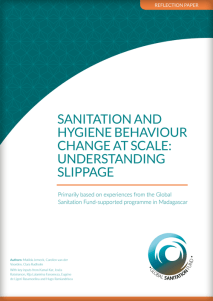
GSF-Slippage-Reflections-Paper-CoverAs sanitation and hygiene programmes mature, the challenge shifts from bringing communities to open defecaton free (ODF) status to sustaining this status. In this context, many programmes are confronted with the issue of slippage. This concept refers to a return to previous unhygienic behaviours, or the inability of some or all community members to continue to meet all ODF criteria. This paper explores how to discern slippage nuances and patterns, strategies to address, pre-empt and mitigate it as well as alternative monitoring systems that capture the complexity of slippage more fully.
I managed the production and dissemination of the GSF reflection paper (English/French), which which remains one of the most downloaded and talked about GSF publications. The publication was the most downloaded WSSCC product in 2016Download the publication

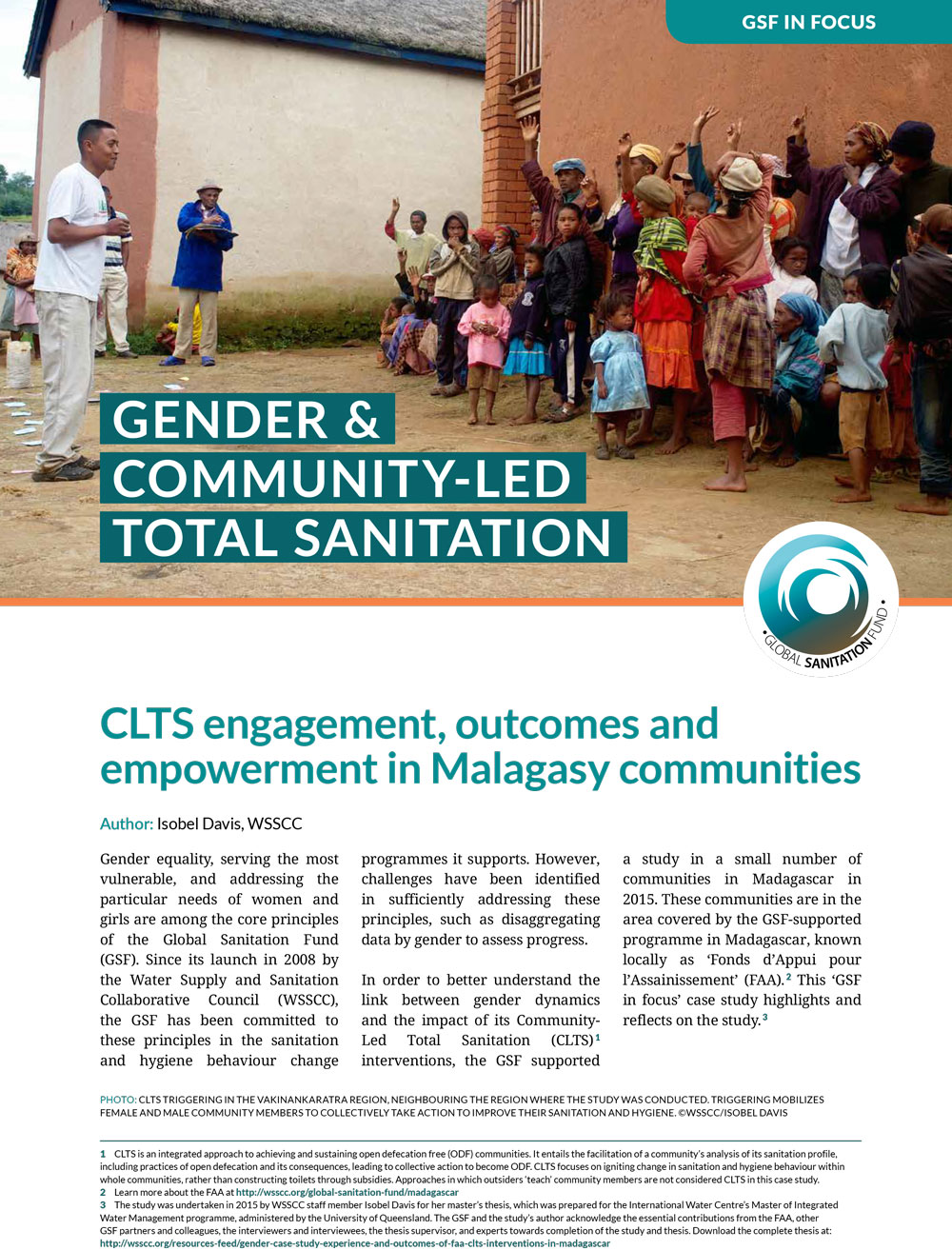
Gender & Community-Led Total Sanitation case study

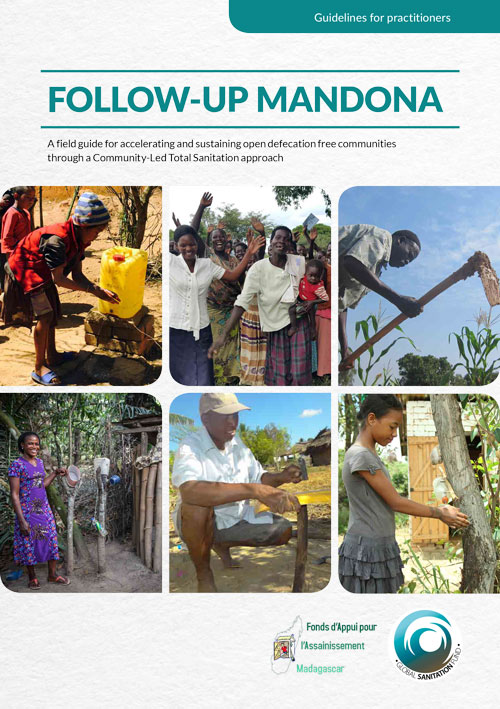
gender-and-clts-thumbI managed the editing, production  and dissemination of various case studies for the Global Sanitation Fund (GSF) in English and French, including one focused on the GSF-funded programme in Madagascar. The case study explores how the GSF-funded programme in Madagascar is promoting sustainability and achieving strong sanitation and hygiene results through a cycle of learning, progress and innovation. Download the full case study